Vroege versus late antistolling na ischemisch CVA met atriumfibrilleren: meta-analyse
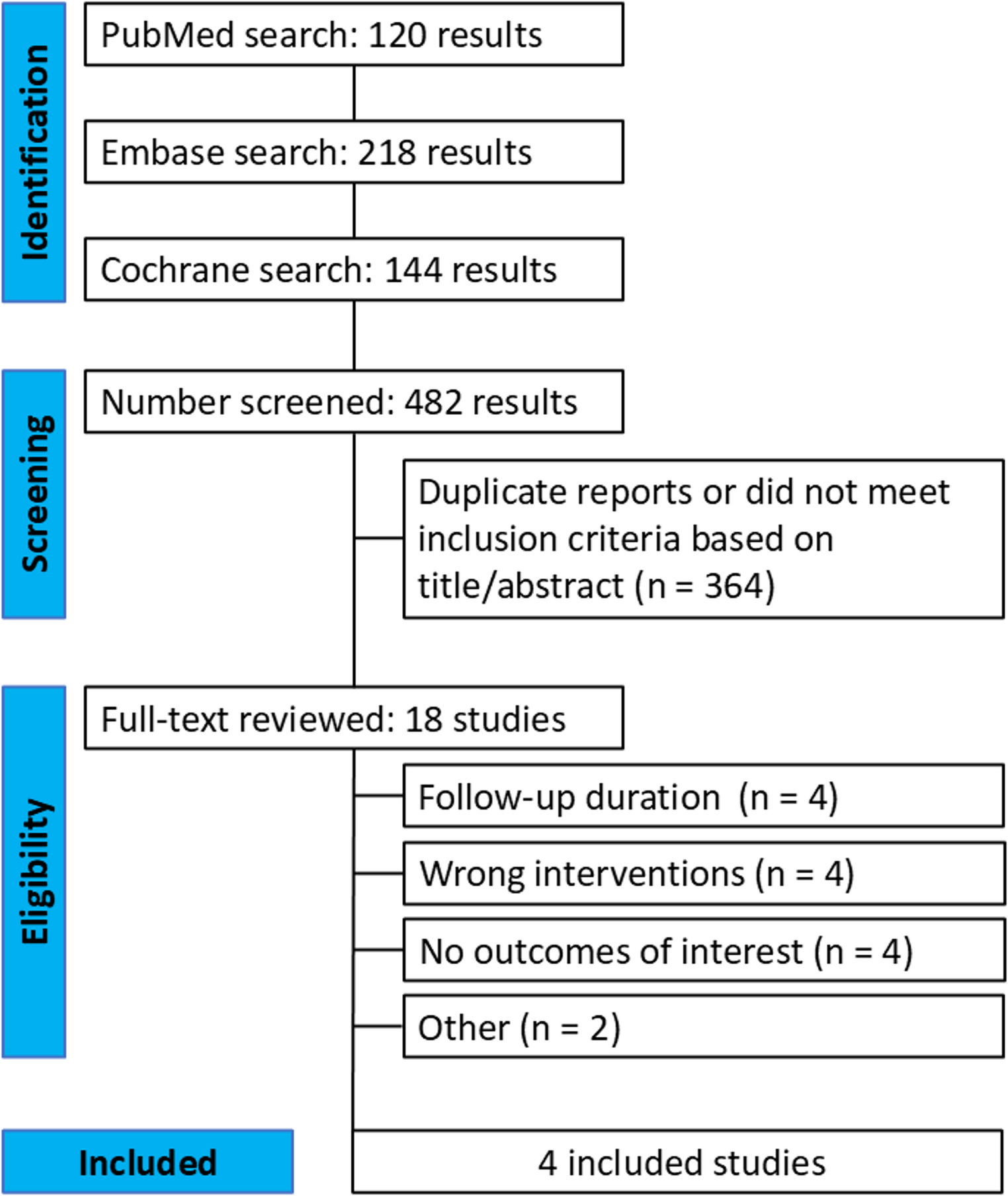
Een meta-analyse van gerandomiseerde trials vergeleek vroege met late start van antistolling bij patiënten met een acuut ischemisch CVA en atriumfibrilleren. De uitkomsten omvatten recidief ischemisch CVA, symptomatische intracraniële bloeding en sterfte.
Abstract (original)
INTRODUCTION: The optimal timing for anticoagulation after acute ischemic stroke (AIS) in patients with atrial fibrillation (AF) remains unclear. This meta-analysis compared the efficacy and safety of early versus late anticoagulation initiation. METHODS: A systematic search of PubMed, Embase, Cochrane CENTRAL, and ScienceDirect (up to June 2025) identified randomized controlled trials (RCT) comparing early and late anticoagulation in adults with AIS and AF. Outcomes included a composite of recurrent ischemic stroke, symptomatic intracerebral hemorrhage, or death, plus individual outcomes for mortality, recurrent stroke, hemorrhagic events, and functional independence. Data were pooled using random-effects models to calculate risk ratios (RR) with 95% confidence intervals (CI). RESULTS: Four RCT (6722 patients) were included. The primary outcome occurred in 3.9% with early and 4.8% with late anticoagulation (RR 0.81; 95% CI 0.63-1.04; p = 0.10; I²=3.8%). Among patients receiving reperfusion therapy, rates were 3.2% vs. 3.9% (RR 0.83; 95% CI 0.53-1.28; p = 0.40). Mortality was 6.9% vs. 7.2% (RR 0.96; 95% CI 0.80-1.14; p = 0.61), ischemic stroke 2.3% vs. 2.9% (RR 0.77; 95% CI 0.53-1.13; p = 0.19), hemorrhagic events 0.8% vs. 1.3% (RR 0.68; 95% CI 0.41-1.13; p = 0.14), and functional independence (mRS 0-2) 66.3% vs. 65.4% (RR 1.01; 95% CI 0.95-1.07; p = 0.75). CONCLUSION: Early anticoagulation after AIS in AF patients showed comparable efficacy and safety to delayed initiation, supporting its use in appropriately selected patients with predominantly mild-to-moderate ischemic stroke.
Dit artikel is een samenvatting van een publicatie in Neurological sciences : official journal of the Italian Neurological Society and of the Italian Society of Clinical Neurophysiology. Voor het volledige artikel, alle details en referenties verwijzen wij u naar de oorspronkelijke bron.
Lees het volledige artikelDOI: 10.1007/s10072-025-08789-1
