Therapietrouw aan lipidenverlagende medicatie na PCI in Nederland
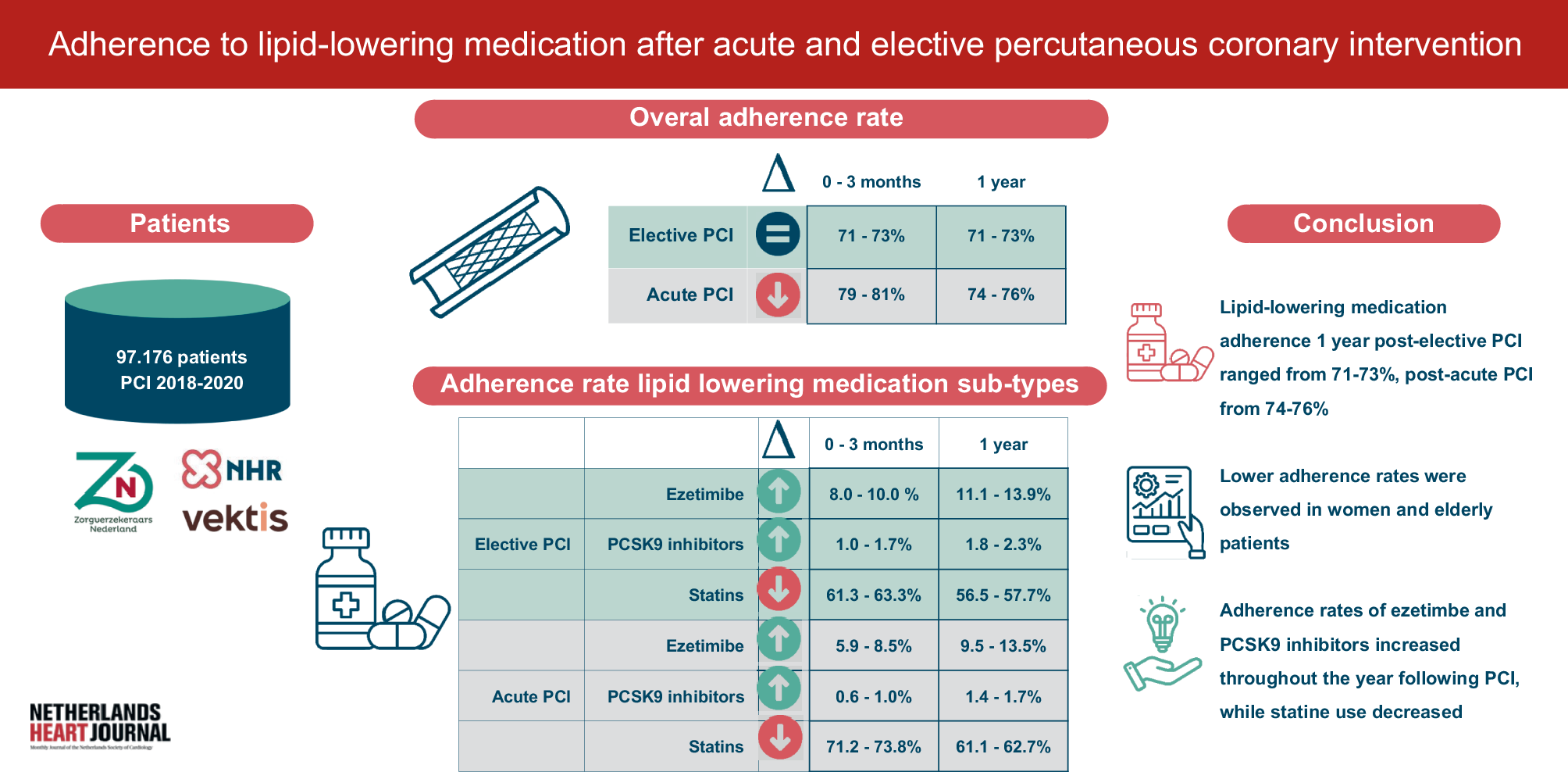
In deze retrospectieve cohortstudie op basis van het Vektis-declaratieregister werd de therapietrouw aan lipidenverlagende medicatie onderzocht in het eerste jaar na percutane coronaire interventie in Nederland.
De resultaten tonen dat therapietrouw, ondanks het bewezen voordeel van statines na PCI, nog steeds teleurstellend is. Dit Nederlandse real-world onderzoek biedt concrete aanknopingspunten voor kwaliteitsverbetering.
Abstract (original)
BACKGROUND: Lipid-lowering medication reduces the risk of future cardiovascular events and mortality, yet adherence is often disappointing. This study evaluates adherence rates of lipid-lowering medication and its subtypes during the first year following acute and elective percutaneous coronary intervention (PCI) in the Netherlands. METHODS: This retrospective cohort study utilized data from a nationwide all-payer claims database managed by Vektis, containing all medical care claims reimbursed by Dutch national insurance companies. We included 97,176 patients who underwent PCI in 2018-2020. Adherence was defined as a medication possession rate ≥ 80%. RESULTS: Adherence rates 0-3 months post-elective PCI ranged from 71-73% among the years and remained stable over the year following PCI. For acute PCI, adherence rates 0-3 months post-acute PCI were initially higher (79-81%) but declined to 74-76% during the year following PCI. During the year following PCI, adherence rates for ezetimibe and proprotein convertase subtilisin/kexin type 9 (PCSK9) inhibitors increased slightly to about 13%, respectively 2%, while statin adherence decreased. For statin subtypes, adherence rates for rosuvastatin increased at the expense of simvastatin, with adherence for atorvastatin and other statins remaining relatively stable. Lower adherence rates were observed among females and patients ≥ 80 years compared to males and younger patients. CONCLUSION: This study found lipid-lowering medication adherence 1 year post-elective PCI ranged from 71-73% and post-acute PCI from 74-76%. Lower adherence rates were observed in women and elderly patients. Adherence rates of ezetimibe and PCSK9 inhibitors increased throughout the year following PCI, while statin use decreased.
Dit artikel is een samenvatting van een publicatie in Netherlands heart journal : monthly journal of the Netherlands Society of Cardiology and the Netherlands Heart Foundation. Voor het volledige artikel, alle details en referenties verwijzen wij u naar de oorspronkelijke bron.
Lees het volledige artikelDOI: 10.1007/s12471-026-02028-8
