Rosuvastatine beschermt tegen oxLDL-geïnduceerde endotheelstress en atherosclerose via NF-κB
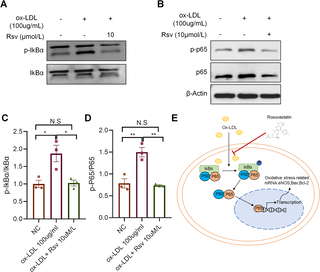
Atherosclerose is de basisoorzaak van cardiovasculaire ziekte. Dit onderzoek toont dat rosuvastatine endotheelcellen beschermt tegen oxidatieve stress door geoxideerd LDL en atherosclerotische plaquevorming vermindert bij ApoE-/- muizen via de NF-κB-route.
Abstract (original)
Cardiovascular disease is one of the diseases with the highest global incidence and mortality rates, and atherosclerosis is its basic cause. Endothelial dysfunction induced by risk factors such as lipid oxidation or inflammatory stimulation is a critical stage in the development of atherosclerosis, with endothelial oxidative stress and apoptosis serving as important pathological bases. Rosuvastatin influences the occurrence of atherosclerosis by regulating lipid levels. In this study, we investigated the effects of rosuvastatin on ox-LDL-induced endothelial cell injury and atherosclerosis. The results showed that intragastric administration of rosuvastatin inhibited high-fat diet (HFD)-induced changes in the aortic plaque area and aortic root lipid deposition in mice. In addition, rosuvastatin reduced mouse body weight and decreased the plasma levels of low-density lipoprotein (LDL) and total cholesterol (TC). The in vitro results demonstrated that rosuvastatin suppressed ox-LDL-induced endothelial oxidative stress, promoted the expression of nitric oxide (NO) and endothelial nitric oxide synthase (eNOS), and reduced intracellular reactive oxygen species (ROS) production. Additionally, rosuvastatin protected against ox-LDL-induced endothelial apoptosis by increasing Bcl-2 expression and decreasing Bax expression. Mechanistically, rosuvastatin inhibited the activation of the NF-κB signaling pathway induced by ox-LDL and suppressed the phosphorylation of P65, thereby reducing the expression of molecules related to oxidative stress and apoptosis. In conclusion, this study suggests that rosuvastatin may attenuate atherosclerosis by inhibiting endothelial oxidative stress and apoptosis, which provides a theoretical basis for the prevention and treatment of atherosclerosis.
Dit artikel is een samenvatting van een publicatie in PloS one. Voor het volledige artikel, alle details en referenties verwijzen wij u naar de oorspronkelijke bron.
Lees het volledige artikelDOI: 10.1371/journal.pone.0339967
