Niet-statine therapie: welk middel voor welke patiënt?
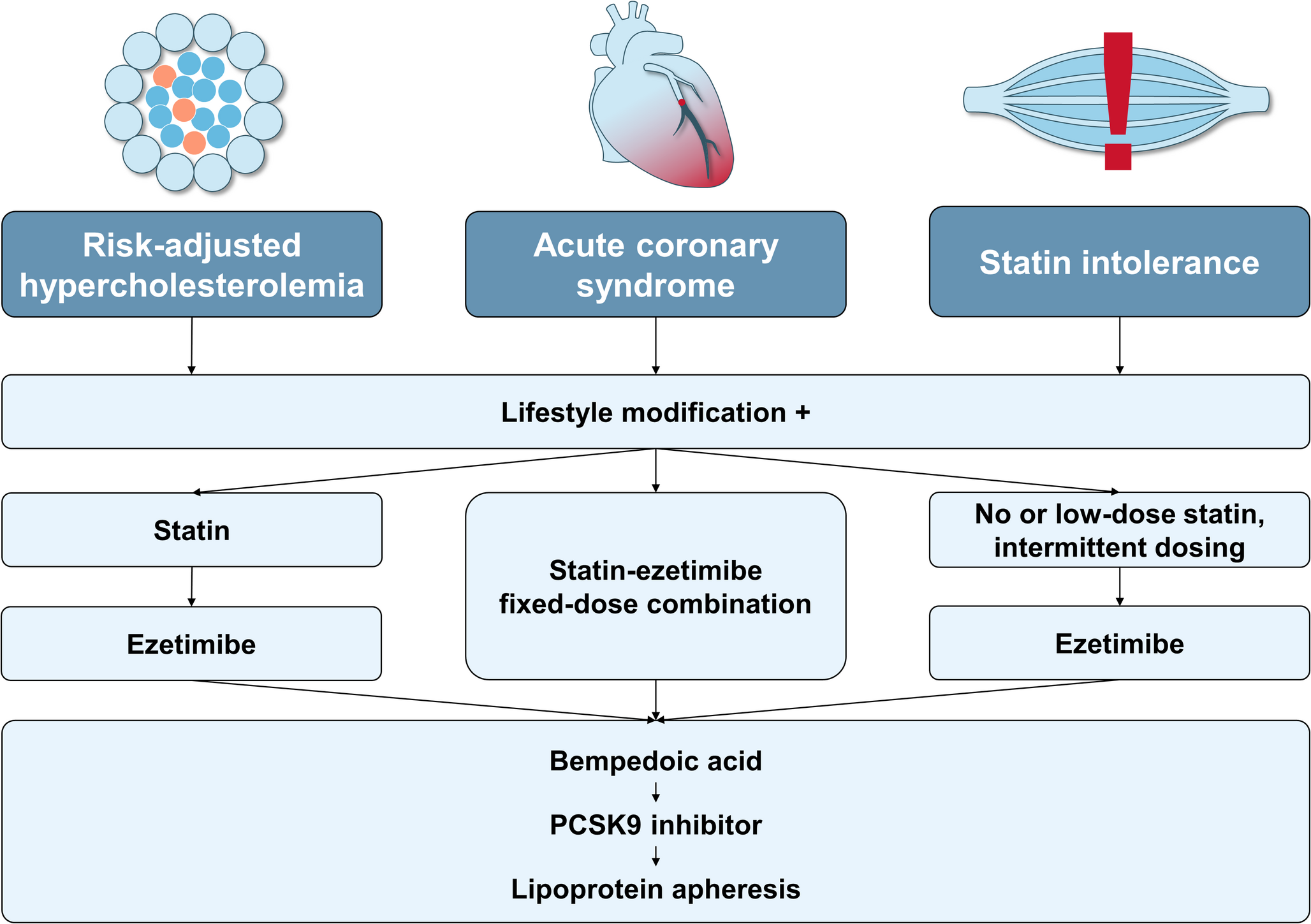
Dit review bespreekt hoe de beschikbare en toekomstige niet-statine lipidenverlagende therapieën optimaal kunnen worden ingezet. Het biedt een praktisch kader voor het sequentieel kiezen bij statine-intolerantie, verhoogde triglyceriden, verhoogd Lp(a) en zeldzame genetische dyslipidemieën, in lijn met de 2025 ESC/EAS-richtlijnupdate.
Abstract (original)
PURPOSE OF REVIEW: On the basis of life-style changes and statins, current guidelines recommend early combination therapy to reduce LDL cholesterol (LDL-C). Available and future novel non-statin lipid-lowering therapies may have specific advantages in patients with (1) statin intolerance, (2) elevated triglyceride-rich lipoproteins, (3) elevated lipoprotein(a), and (4) rare genetic dyslipidemias. RECENT FINDINGS: Currently available treatment options to lower LDL-C with proven cardiovascular benefit include statins, ezetimibe, bempedoic acid, and PCSK9 antibodies. The 2025 update of the ESC/EAS dyslipidemia guidelines incorporates recommendations on early combination treatment and management of rare dyslipidemias, which are detailed in this review. Novel LDL-C-lowering strategies, targeting PCSK9 and CETP, may further improve dyslipidemia management. Drugs in development with profound effects on lipoprotein(a) or triglyceride concentration may allow for specific modification of residual cardiovascular risk. Innovative DNA-targeting therapies are moving towards clinical testing in larger studies. SUMMARY: Various treatment options for patients with dyslipidemia and distinct characteristics have become available. Future developments may allow for even more tailored treatment, depending on dyslipidemia phenotype.
Dit artikel is een samenvatting van een publicatie in Current atherosclerosis reports. Voor het volledige artikel, alle details en referenties verwijzen wij u naar de oorspronkelijke bron.
Lees het volledige artikelDOI: 10.1007/s11883-026-01390-7
